Courage to Live History
March 2026
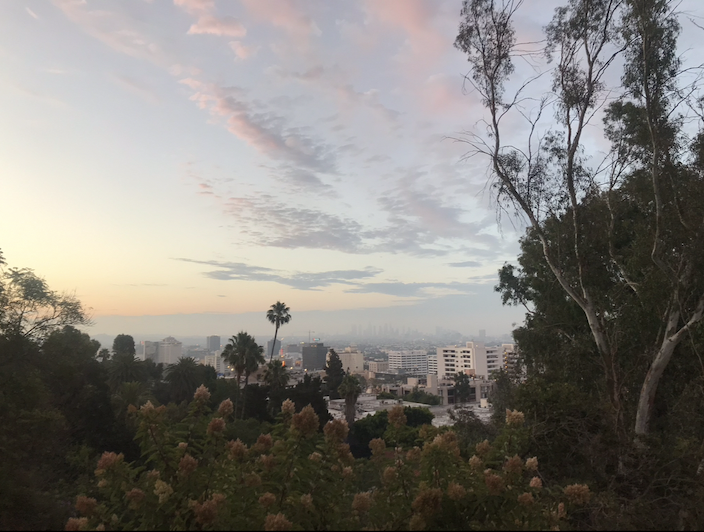
Los Angeles at dusk. A reminder to be where your feet are.“I’d love to travel back in time.”
You’ve heard people say that. You’ve said it. I’ve said it.
Let me share with you one of my time travel daydreams: to live in Los Angeles for one month, mid-to-late 1970s. Visions of cruising down Ventura Blvd in Studio City in a convertible with “The Love I Lost” by Harold Melvin and the Bluenotes playing on the stereo; getting to see the New Hollywood greats on the big screen during their initial run; seeing early punk rock shows at Madame Wong’s, perhaps; listening to Cheech and Chong on vinyl; and experiencing life without digital interface or A.I. — a recovery of a world I once knew.
Except time travel is not all it’s cracked up to be.
For one, acclimating to a world without smart phones and WiFi is probably more difficult than we’re optimistically telling ourselves. Second, the food will probably feel quite bland. Our contemporary environment, with all its diversity and multiculturalism, has afforded us not only a wide array of ethnic food from which to try daily but also ingredients and techniques that have found their way into “American cuisine.” Next, there is the issue of driving, in stark contrast to our modern-day world of automatic transmission, airbags, rearview cameras, and USB ports. The words “defensive driving,” along with how we understand “bad drivers” and “road rage,” will take on a whole new meaning. And if you’re a non-smoker or trying to quit, it goes without saying that the 70s — or earlier — would be rough: buses, planes, restaurants, grocery stores, all of it filled with cigarette smoke.
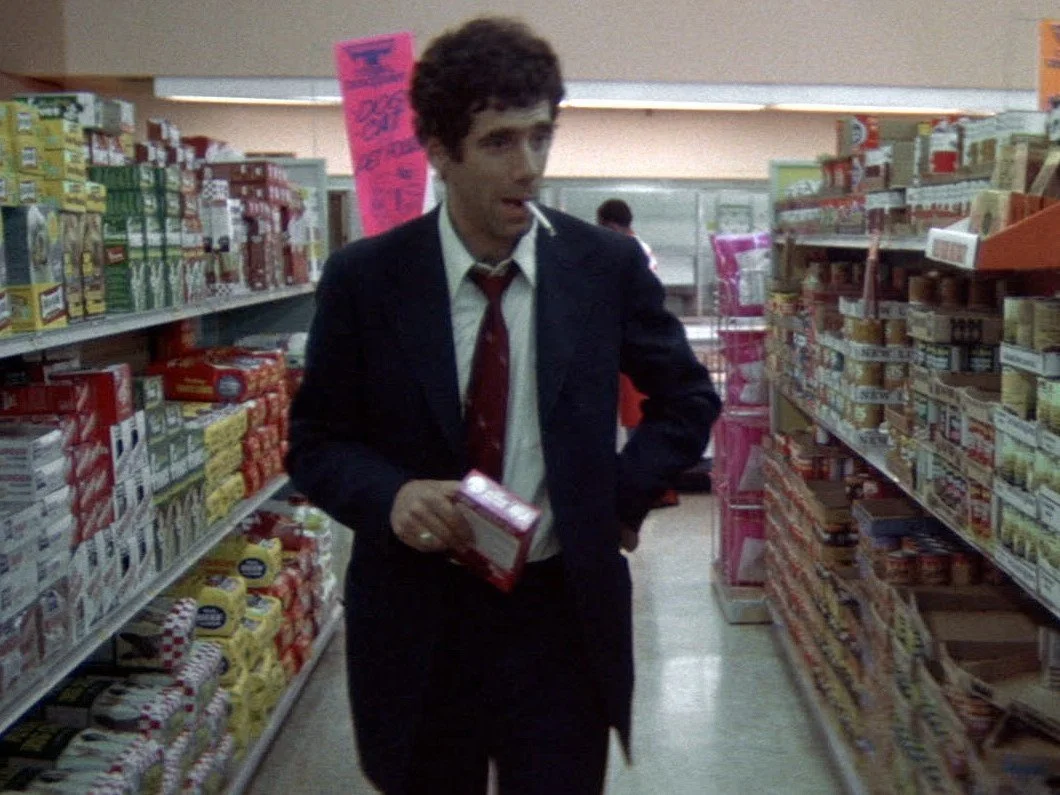
Elliot Gould as Philip Marlowe in The Long Goodbye (Robert Altman, 1973)So why do we still entertain these time travel fantasies?
Part of the answer can be found in a book about the 1950s that has inspired some of my recent work. In Fractured Fifties, Christine Sprengler describes a practice she calls periodization: “the act of circumscribing and foregrounding a set of features to define a particular era,” largely through circulated media images, with nostalgia as a driving force. The fifties, Sprengler argues, “functions as a politically charged cultural metaphor that bristles with an array of ideological constellations” and emotionally charged meanings.
In other words: whose 1950s are we talking about?
How much of that decade is historically real, and how much is a media construct that has been ideologically repurposed over time?
The same could be asked of any decade whose sights and sounds circulate widely through film, television, photography, and music. When you ask someone where in history they would travel, if they could, the answer is often a time and place their imagination has already visited many times. Film, media, and other visual culture forms have cemented in the minds of spectators a version of the past that is sensuous, emotionally vivid, and conveniently stripped of most of its mundane or unpleasant details.
This is where another crucial concept enters the picture.
Film and media images have a way of bestowing on us memories of a past we did not live — yet they often feel as real as our own personal memories.
The scholar Alison Landsberg describes this phenomenon as prosthetic memory. Prosthetic memories are memories we acquire through media that nevertheless feel experiential and embodied. They do not belong to our personal biography, yet they attach themselves to our emotional life in ways that can be surprisingly powerful.
Landsberg argues that these mediated memories can generate empathy and create ethical relationships across historical distance. They allow people to imagine lives, events, and struggles they did not personally experience.
I remember when Spielberg’s Saving Private Ryan (1998) was released. Moviegoers who had not lived through World War II walked out of theaters shaken, sometimes convinced they had experienced something akin to memory itself. The film’s sensory intensity — the soundscape, the visual chaos, the bodily immediacy — created an experience that felt less like watching a story and more like recalling an event.
This is why prosthetic memory complicates the familiar claim that contemporary audiences are historically ignorant. In many cases, people are not indifferent to the past. Quite the opposite: they feel intensely connected to it.
But that connection is mediated.
The past reaches us through images.
And once those images enter our imaginative life, they become part of the architecture of memory itself.
So my understanding of nostalgia is bound up with periodization, prosthetic memory, and other concepts in film and media studies that examine how moving images construct alternative ways of experiencing history.
To be clear, I don’t think all nostalgia is bad. In fact, some nostalgia can be useful — depending on how we approach it. This is because nostalgia is not really a backward glance. It is more like a sideways glance. Nostalgia does not show us the actual past. Instead, it reveals one of many possible pasts, filtered through memory, media, and imagination. Our recollections are entangled with film images, television scenes, literary narratives, and photographs. These images circulate socially, merging with the memories of others to form what historians often call public memory. The result is a strange hybrid: part history, part imagination, part emotional inheritance.
So the next time nostalgia hits, it may be worth pausing for a moment. Look closely at what those feelings are actually doing. Sometimes nostalgia is not about escaping the present. Sometimes it is about learning how to see the present more clearly.
Scripted Spaces, Unscripted Life
You can feel it while driving down Sunset Boulevard, where a diner looks like a movie set and a movie set looks like a diner. You can feel it when a stretch of downtown suddenly appears familiar — not because you have been there before, but because you have seen it on screen. The city becomes a kind of open archive of images. A place where memory is often inseparable from media. For someone who studies film, this can be intoxicating. The city becomes a playground of references. Every neighborhood begins to resemble a scene. Every building looks like a prop. Every street corner becomes a potential frame. It is a pleasurable way of moving through the world. But it also carries a quiet risk.
When everything begins to resemble cinema, it becomes harder to distinguish between lived experience and representation. Los Angeles, in other words, trains us to live inside images. This is not necessarily a flaw. Cinema remains one of the most powerful ways humans have invented for thinking about space, time, and experience. Films teach us how to notice things. They train our attention. They sharpen our sensitivity to the textures of the world. But the same visual literacy that deepens perception can also subtly reframe reality as spectacle. Places become meaningful not because of their layered histories but because they remind us of something we once watched.
Over time, I began to realize that I had been moving through Los Angeles in exactly this way. I was reading the city through film, through nostalgia, through the imagined pasts that cinema had deposited in my mind. I was looking for echoes of other decades — New Hollywood streets, punk clubs, vanished theaters — as though the city’s meaning lived primarily in those cinematic ghosts. But Los Angeles is not a museum of film history. It is something far stranger and more alive. The architectural theorist Dana Cuff has called it a “provisional city,” a place that constantly destroys and remakes itself. Buildings disappear. Neighborhoods mutate. Rivers are buried. Entire landscapes slip beneath new layers of asphalt and concrete. To live in Los Angeles is to inhabit a city that is never finished. Its spaces may be scripted by decades of representation, but life unfolding within them is always unscripted. And it is precisely within that tension — between image and reality, representation and experience — that a different relationship to history begins to emerge.
Los Angeles is often described as a city without a center — a metropolis that sprawls endlessly outward rather than gathering inward. But that description misses something essential. Los Angeles does have centers. Many of them, in fact. They are simply not geographic. They are narrative. To move through Los Angeles is to move through stories that have already been written.
The cultural historian Norman Klein once described the city as a landscape of “scripted spaces.” By this he meant that Los Angeles’s architecture, neighborhoods, and public environments are deeply entangled with the representational industries that grew here. Film, television, photography, advertising, and theme parks do not merely depict Los Angeles. They feed back into the city itself, shaping how spaces are designed, remembered, and experienced.
Representation becomes architecture. Cinema becomes geography.
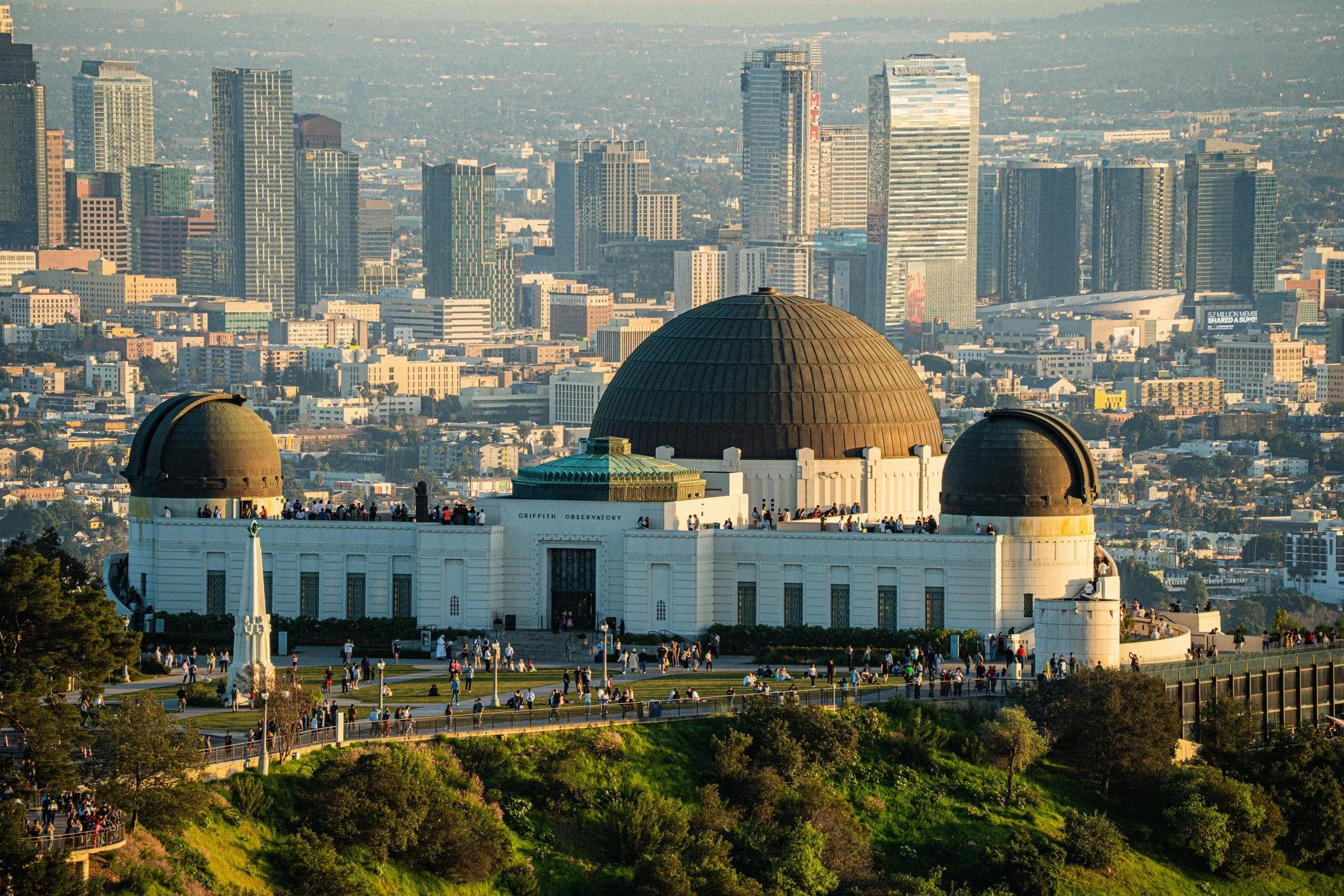
Griffith Observatory, Los Angeles, where the terrace scripts behavior, reminding us that some places quietly instruct us how to see. Living History Through Cinema and Conversation
If courage means stepping into history rather than merely observing it, then cinema provides one of the most powerful spaces in which that encounter can occur. Film has always been capable of transporting viewers across time and geography, but the most meaningful historical films do more than recreate the past. They ask us to inhabit it—to feel the uncertainties, ethical tensions, and sensory environments of people who lived before us. Let’s look at some films that I’ve been teaching and writing about recently.
Consider a film like The Battle of Algiers. Pontecorvo’s film refuses the polished distance of historical spectacle. Shot with a documentary immediacy, it plunges the viewer into the streets of colonial Algiers, where the lines between civilian life and political struggle dissolve. The film’s power lies not only in its subject matter but in its form: handheld cameras, non-professional actors, and an almost journalistic attention to spatial movement.
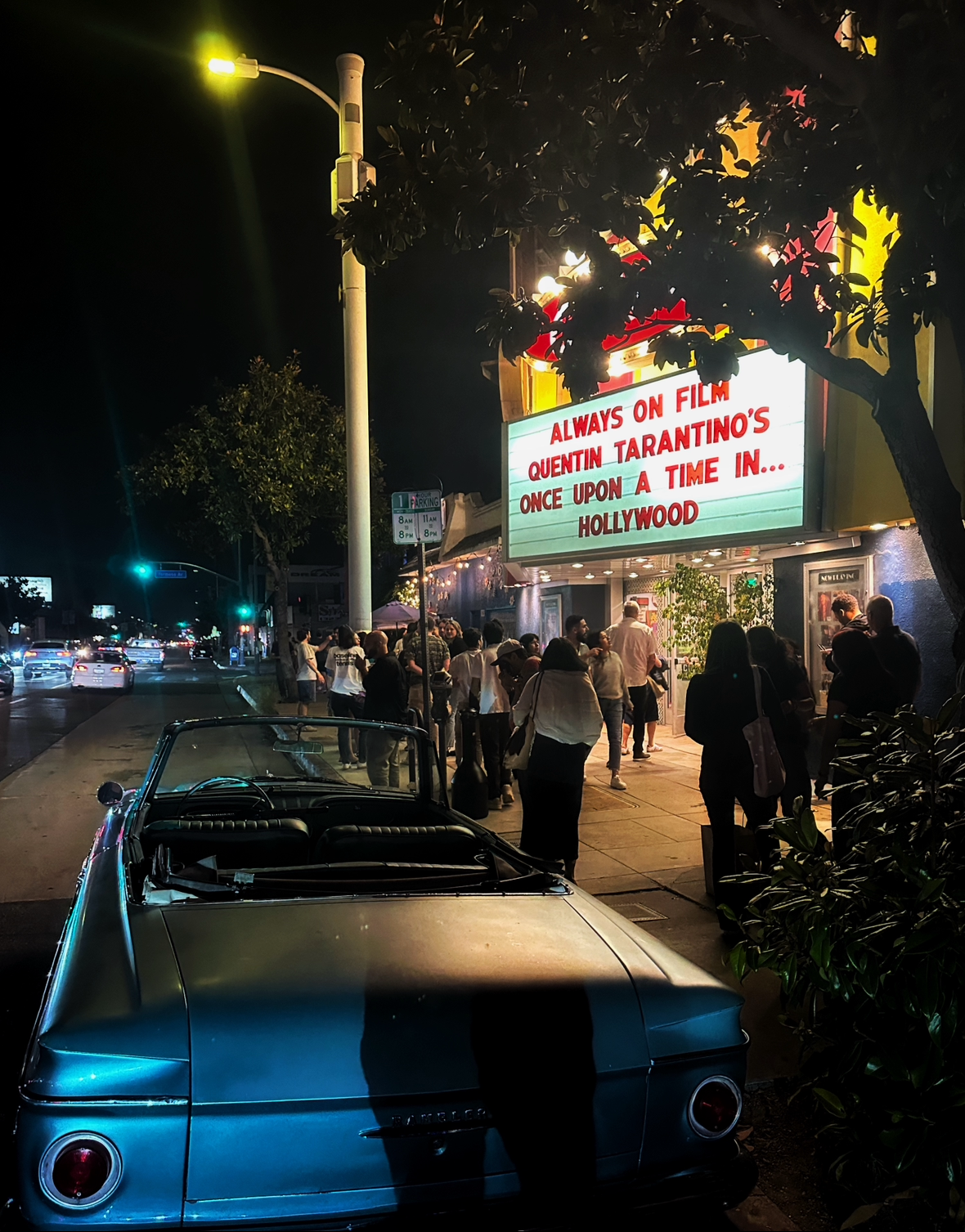
New Beverly Cinema, July 2024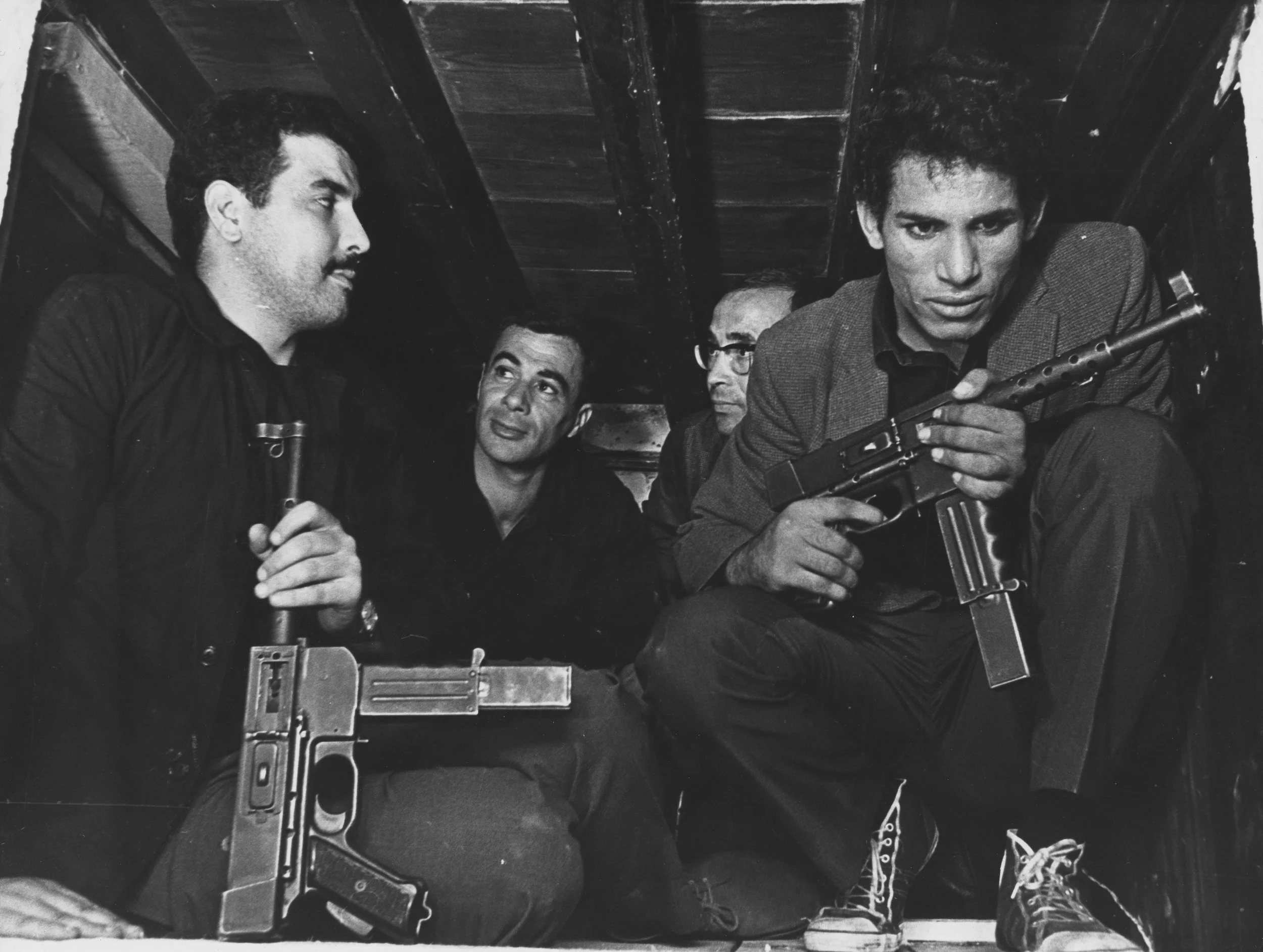
The Battle of Algiers (Gillo Pontecorvo, 1966)Watching the film is not simply an act of learning about a historical conflict; it becomes an exercise in historical imagination. We are asked to feel what it might have been like to move through those streets, to navigate the moral ambiguities of resistance and repression. The viewer becomes a participant in a thought experiment about history.
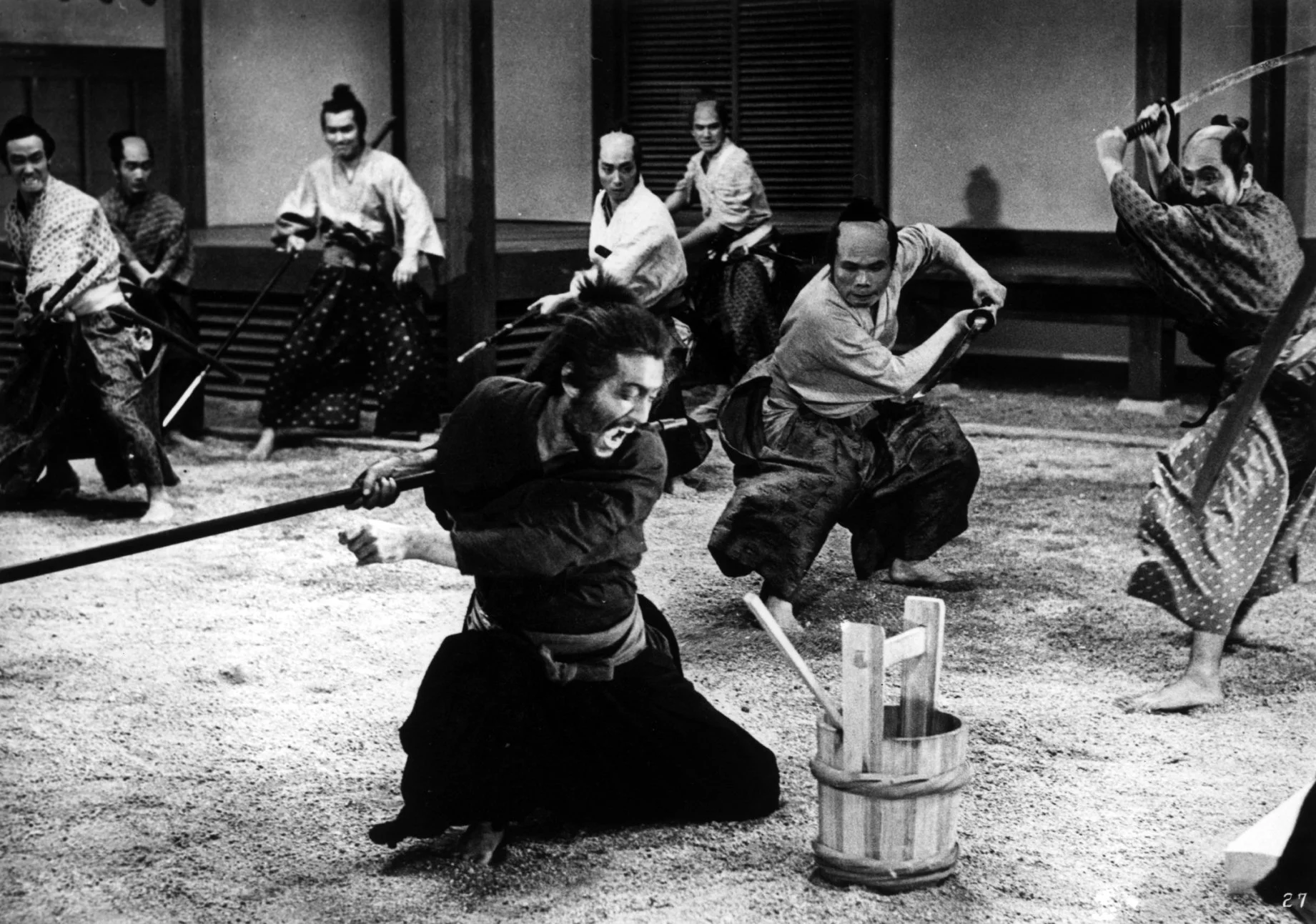
A different kind of historical encounter emerges in Harakiri. Kobayashi’s film unfolds largely within the carefully ordered courtyard of a samurai clan, yet within that confined space it reveals the contradictions of an entire social system. Ritualized gestures, ceremonial language, and rigid codes of honor initially present themselves as expressions of moral clarity. Yet as the narrative unfolds through flashbacks and testimony, these rituals gradually reveal themselves to be mechanisms of power.
The film’s brilliance lies in how it transforms historical drama into ethical inquiry. Each retelling of the past alters our understanding of what has already occurred. The courtyard, which at first appears stable and orderly, becomes a stage upon which the moral architecture of feudal authority begins to collapse. By the end of the film, viewers are no longer observing a distant historical moment. They are confronting the uncomfortable realization that institutions often preserve their authority by rewriting the very history they claim to defend.
Harakiri (Masakai Kobayashi, 1962)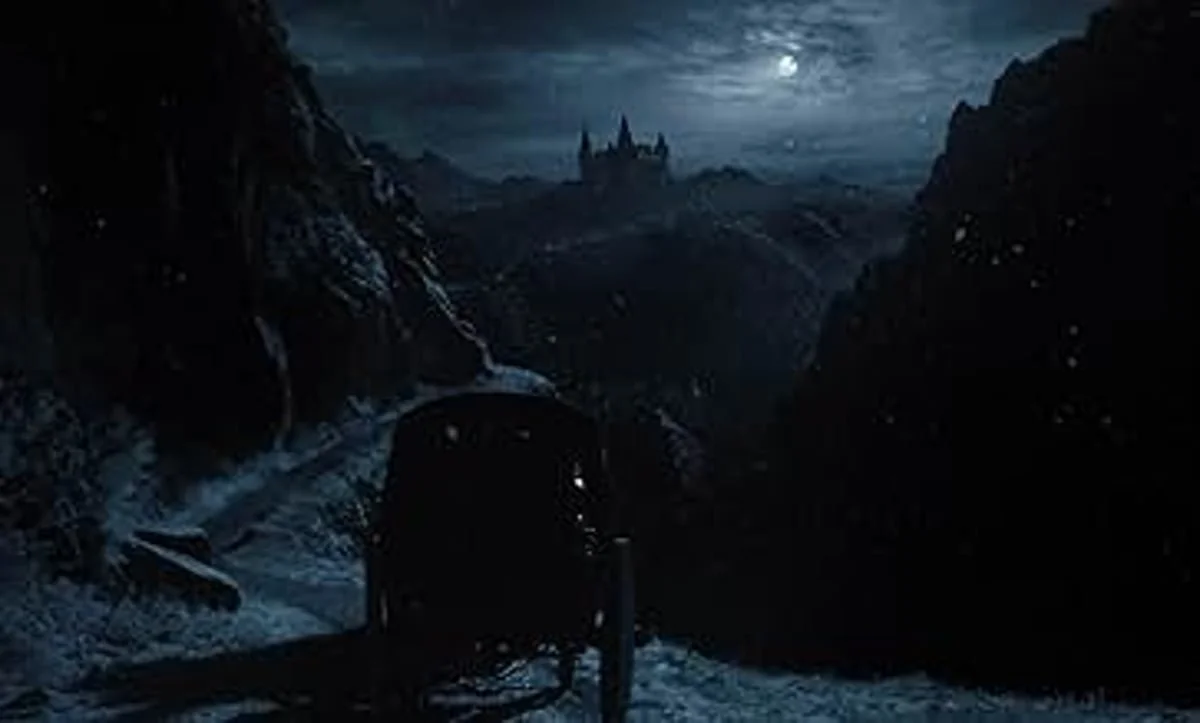
Other films approach historical encounter through atmosphere and texture. Nosferatu reconstructs nineteenth-century Europe through obsessive attention to environment: candlelit interiors, creaking wooden staircases, windswept landscapes, and shadows that seem to stretch beyond the boundaries of the frame. Eggers’s approach to historical filmmaking is grounded in the belief that the past must be experienced sensorially.
The film echoes the visual grammar of early expressionist cinema while grounding its imagery in the material realities of another era. Shadows fall across walls in ways that recall silent film traditions, yet the world itself feels tactile and inhabited. Watching Nosferatu becomes a layered temporal experience. We inhabit the imagined past of nineteenth-century Europe while simultaneously encountering the visual memory of cinema’s own history.
Nosferatu (Robert Eggers, 2024)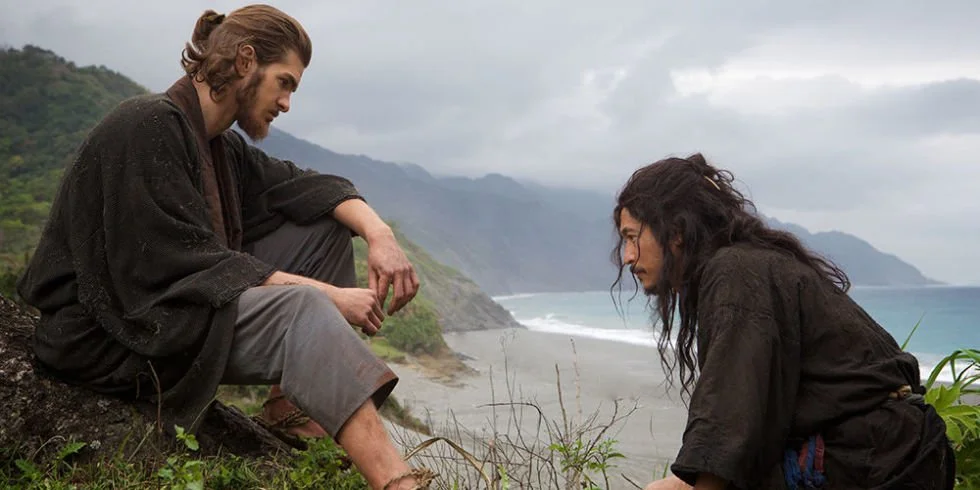
Another powerful example of cinema as historical encounter appears in Silence. Set during the seventeenth-century persecution of Christians in Japan, the film unfolds within landscapes shaped by fog, wind, and water. The terrain—rocky coastlines, damp forests, mist-covered hills—becomes inseparable from the characters’ spiritual and moral dilemmas.
Here the natural world functions as more than setting. It becomes the medium through which historical experience is felt. Silence itself becomes an atmosphere through which both characters and viewers must move. The film invites us to inhabit uncertainty rather than resolve it. In doing so, it suggests that the past cannot always be understood through narrative clarity. Sometimes history is experienced most truthfully as a condition of doubt.
Silence (Martin Scorsese, 2016)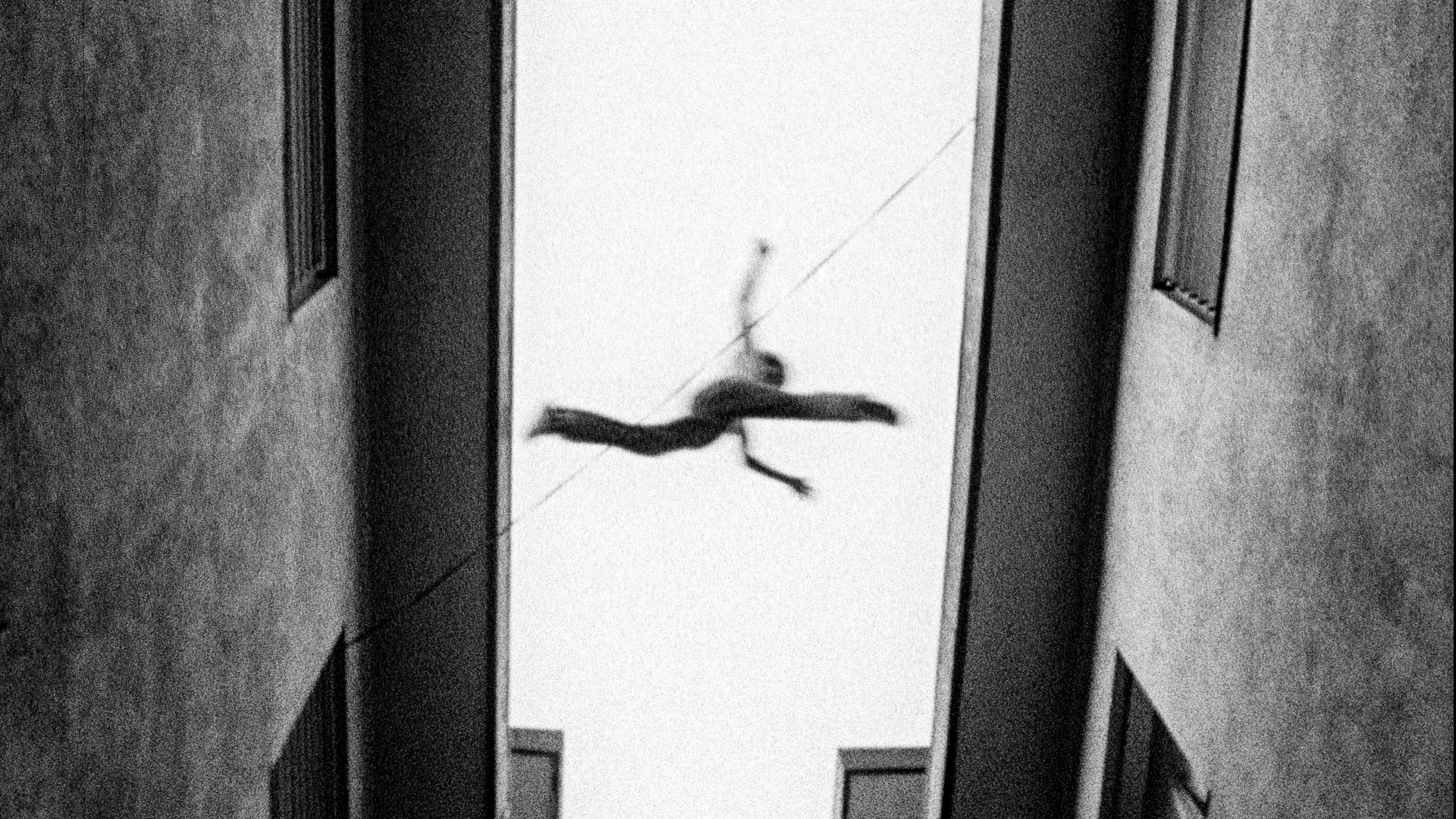
At the opposite end of the aesthetic spectrum lies Killer of Sheep, a film that approaches history through the quiet textures of everyday life. Burnett’s Los Angeles is not the mythic Hollywood of studio backlots and celebrity culture but the working-class neighborhoods of Watts. Children play among abandoned buildings. Adults move through routines shaped by economic pressure and communal resilience.
Nothing about the film is presented as grand historical drama, yet it captures a particular moment in American urban life with remarkable clarity. Watching Killer of Sheep reminds us that history is often composed not of monumental events but of small gestures—moments that accumulate quietly within the rhythms of everyday existence.
Killer of Sheep (Charles Burnett, 1978)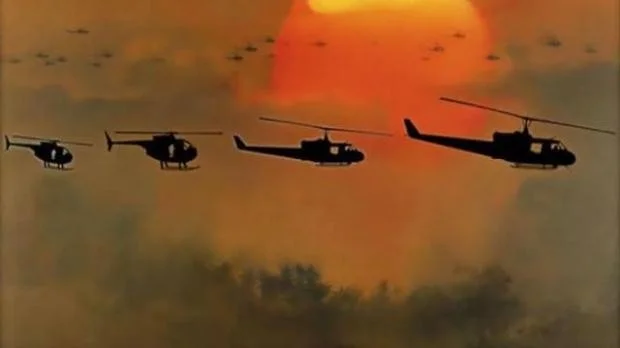
Apocalypse Now (Francis Ford Coppola, 1979)Even films associated with epic spectacle can create powerful encounters with historical consciousness. Apocalypse Now transforms the Vietnam War into a psychological landscape where the boundaries between past and present, civilization and chaos, begin to dissolve. The journey upriver becomes less a military mission than a descent into historical disorientation.
What viewers encounter in the film is not simply the story of a war but the unsettling recognition that history itself can become unstable. Moral frameworks collapse. Language fails. What remains is a sense of historical vertigo—a recognition that the forces shaping events often exceed our ability to comprehend them fully.
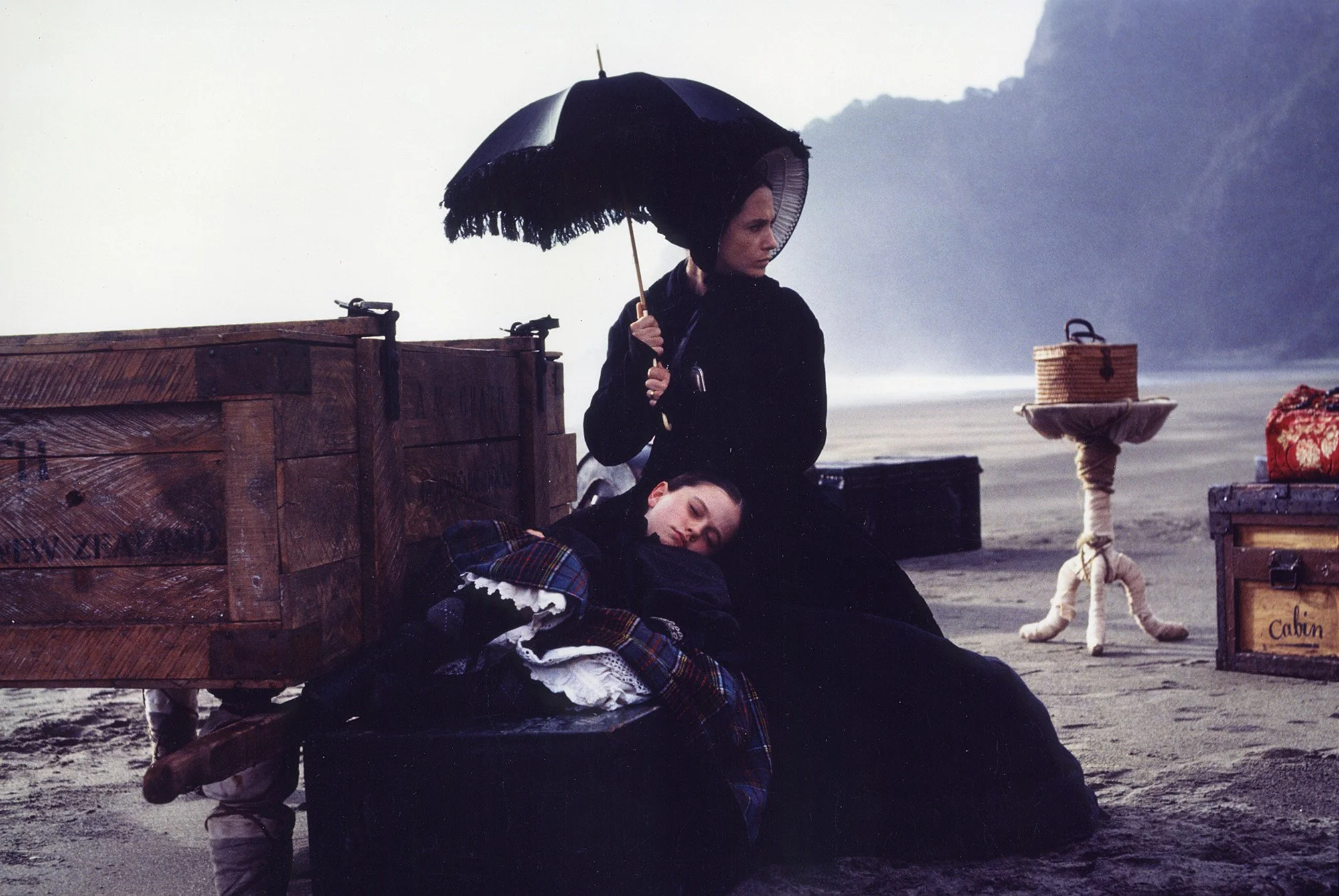
Similarly, The Piano constructs its historical world through the relationship between human emotion and physical environment. Campion’s nineteenth-century New Zealand is a landscape of mud, wind, and crashing waves. Ada’s piano—carried across beaches and placed improbably within the wilderness—becomes both an object and an emotional conduit.
In this film, landscape does not merely frame historical events. It absorbs them. The textures of weather, land, and sound become part of the emotional archive of the past. History is embedded not only in documents or monuments but in the sensory memory of place.
Taken together, these films demonstrate that the past is not simply something we study. It is something we experience—through images, sounds, and environments that invite us to imagine lives different from our own.
The Piano (Jane Campion, 1993)This is why I often tell students that cinema is one of the most powerful laboratories for historical thought. When we sit in a darkened theater—or increasingly when we watch films together in classrooms, community spaces, or living rooms—we participate in a collective act of imagination. Cinema allows us to step briefly into other historical worlds.
But the real work begins when the film ends.
In an era dominated by screens, algorithms, and endless digital distraction, it is easy to mistake mediated experience for lived reality. Many people spend their days moving through carefully curated digital environments—feeds of images, videos, and commentary that simulate engagement with the world while quietly distancing us from it.
This is why I often return to a simple phrase: be where your feet are.
The phrase emerged from studies of people who temporarily disconnected from their phones and digital devices. Within a few days, many participants reported a striking shift in perception. Instead of constantly thinking about distant places, mediated images, or algorithmic feeds, their attention began to settle on their immediate surroundings. They noticed the textures of the spaces around them—the sound of wind, the movement of people, the subtle rhythms of daily life.
In other words, they began to inhabit the world rather than merely observe representations of it.
Cinema can sometimes function in a similar way. At its best, film reminds us that experience is not abstract. It is grounded in physical spaces, human encounters, and shared environments. Watching films together—discussing them, arguing about them, remembering them—becomes a way of reconnecting with the social dimensions of historical understanding.
Over the past several years, podcasting has become one of the most meaningful spaces where these conversations unfold.
On the podcast Moving Histories, discussions explore how cinematic images shape collective memory. Scholars, filmmakers, and critics examine the ways films influence how societies imagine the past. These conversations reveal that historical consciousness is not formed solely through archives or textbooks. It is also shaped by the images and stories circulating through popular culture.
On This Movie Saved My Life, which I co-host with photographer and cinephile Miles Fortune, the conversation takes a more personal turn. Each episode centers on a film that profoundly affected a guest’s life. What begins as a discussion of a single viewing experience often expands into reflections on friendship, identity, creativity, and memory. Films become markers within personal histories—moments that changed how someone saw the world.
Meanwhile, The Horror Vision explores how genre cinema reflects cultural anxieties. Horror films often transform historical fears into visual form, allowing audiences to confront the emotional landscapes of different eras.
Finally, Radical Films focuses on cinema that directly engages political and social transformation. These conversations highlight documentaries and independent films that challenge dominant narratives or bring overlooked histories into view.
Together, these projects form an ongoing conversation about cinema and historical experience. They exist outside traditional academic publishing, yet they engage many of the same questions: How do films shape historical imagination? How do audiences reinterpret the past through images and stories? And how do conversations about cinema create new forms of community?
Podcasting, in this sense, resembles an older intellectual tradition—the café conversation after a film screening, the informal salon where ideas circulate freely among curious participants. These spaces remind us that historical understanding is rarely produced in isolation. It emerges through dialogue. And dialogue requires presence.
To live history courageously is not merely to study the past. It is to participate in the ongoing conversations through which societies remember themselves. It is to engage with the images, stories, and experiences that shape our collective understanding of time. Cinema gives us the images. Conversation gives those images meaning. When we watch films attentively, discuss them openly, and connect them to the worlds we inhabit, we begin to experience history not as a distant abstraction but as something alive—something unfolding around us.
And that, ultimately, is what it means to have the courage to live history.
Courage to Live History
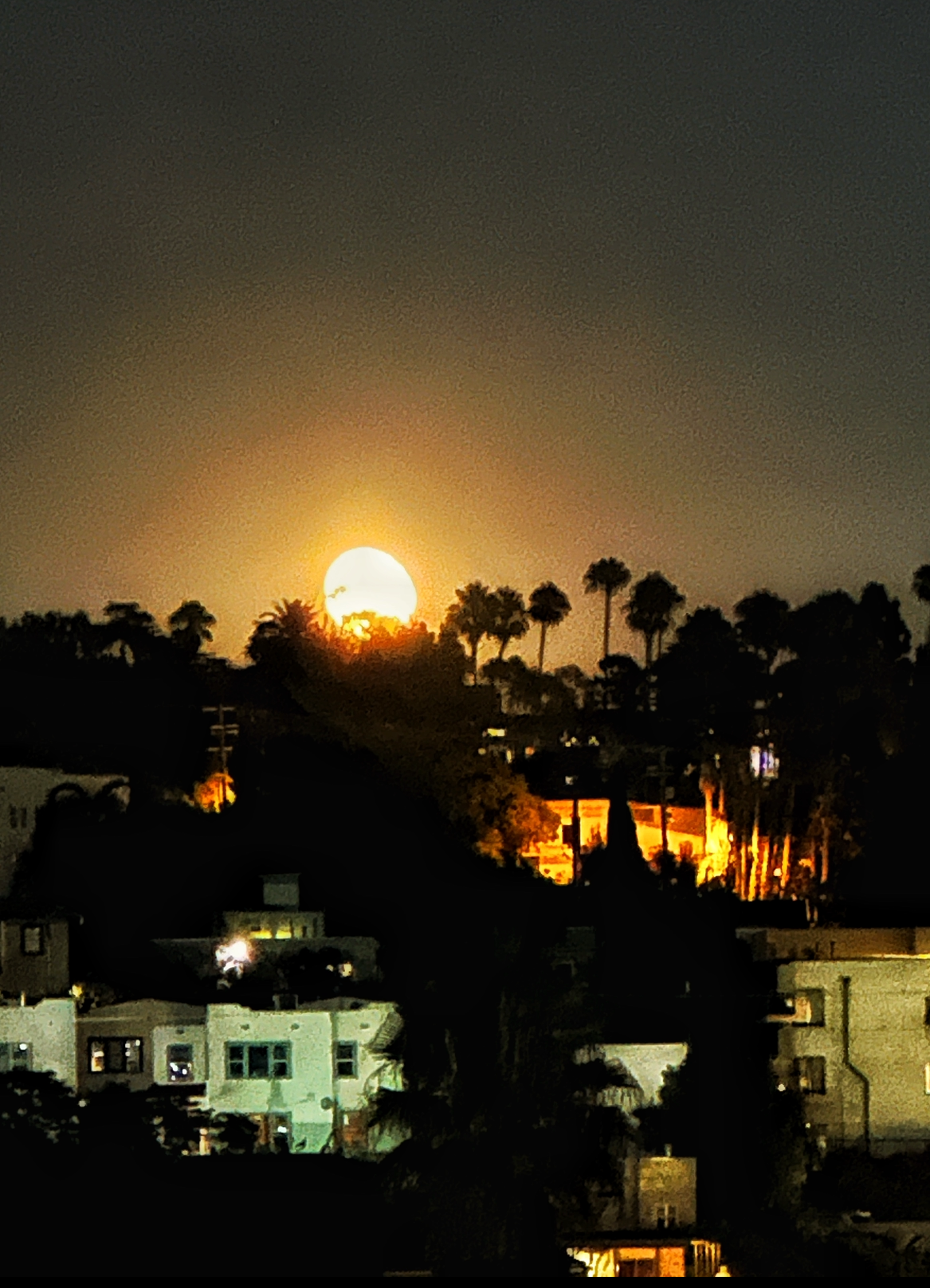
Harvest moon over Silverlake, Los AngelesI’m walking through Olvera Street, doing photographic research at the América Tropical Interpretive Center, when I catch a whiff of mustard oil drifting from one of the nearby restaurants. I recognize the smell instantly. It’s the same scent that fills our kitchen when I cook Indian and Pakistani food for my wife and kid. Then something clicks. Olvera Street is widely known as the birthplace of Los Angeles. But long before it became a tourist destination lined with stalls and mariachi music, this area sat beside a grove of wild mustard plants growing along the banks of a wide and unpredictable river.
The Los Angeles River. Today that river is largely invisible. It has been straightened, paved, and reduced to a concrete flood-control channel that most Angelenos pass without a second thought. Yet for centuries it was the ecological backbone of the region. It flooded unpredictably, shifted course, nourished farms, and shaped the early settlement patterns of Southern California.
Standing there, breathing in the smell of mustard oil, I suddenly realize that the scent connects two landscapes. One is the contemporary landscape of migration and cuisine that defines Los Angeles today. The other is the ecological landscape that existed long before Hollywood, before freeways, before the modern city. For a brief moment, the layers of time collapse. The tourist street. The buried river. The mustard groves. The contemporary restaurant kitchen. All of it becomes visible at once. This is the kind of historical experience that rarely appears in textbooks. It is small. Sensory. Accidental. But it is also powerful.
Moments like this remind us that history is not confined to archives, museums, or documentaries. It is embedded in the textures of everyday life — in smells, sounds, materials, landscapes, and habits.
The challenge is that our media environment often trains us to experience history differently. We are encouraged to imagine the past as something cinematic: distant, stylized, contained within a narrative frame.
But lived history is rarely framed. It appears in fragments. It interrupts our routines. It arrives unexpectedly while we are doing something else entirely. To recognize those moments requires a different kind of attention. A willingness to slow down. A willingness to notice. And perhaps most importantly, a willingness to accept that the past is not safely sealed behind us. It continues to inhabit the present.
Los Angeles makes this tension especially visible. It is a city built on cycles of erasure and reinvention. Buildings disappear. Neighborhoods transform. Rivers are buried and reengineered. Yet traces remain. A smell. A street alignment. A fragment of architecture. A story passed down through generations. These traces remind us that history is not simply something we study. It is something we inhabit.
Which brings us back to nostalgia. If nostalgia simply becomes a longing for stylized images of the past — cinematic highlights stripped of their complexity — then it flattens history into spectacle. But if nostalgia pushes us to ask deeper questions about how the past survives within the present, then it can become something far more productive. It becomes a doorway. Film and media culture play a complicated role here. They give us prosthetic memories. They shape our expectations of what the past should look and feel like. They contribute to the periodized images that populate our imagination. But they can also sharpen our sensitivity to historical experience. Cinema, after all, is fundamentally about attention. About noticing. About framing fragments of the world and inviting viewers to look closely.
When we bring that same attentiveness to the spaces we inhabit — the streets we walk, the buildings we pass, the smells and sounds drifting through the air — something interesting begins to happen. The past stops feeling distant. It begins to feel present. And when that happens, history is no longer something we fantasize about traveling to. It becomes something we are already living inside. Which may be the real challenge. Not the fantasy of traveling backward through time. But the courage to recognize the historical world unfolding around us right now.
The courage, in other words, to live history.
Further Reading
Norman M. Klein
Absences, Scripted Spaces and the Urban Imaginary
https://uplopen.com/en/chapters/4031/files/42529fe3-c80e-4752-9bf5-d6bfb1d4096a.pdf
Dana Cuff
Provisional City: Los Angeles Stories of Architecture and Urbanism
https://mitpress.mit.edu/9780262533201/provisional-city/
Natalie Zemon Davis
Slaves on Screen: Film and Historical Vision
Rasmus Greiner
Cinematic Histospheres: On the Theory and Practice of Historical Films
Alison Landsberg
Prosthetic Memory: The Transformation of American Remembrance in the Age of Mass Culture
Christine Sprengler
Screening Nostalgia: Populuxe Props and Technicolor Aesthetics in Contemporary American Film
These works explore how history, space, and media shape our understanding of the past—themes central to the idea of living history rather than merely observing it.
Further Viewing
Harakiri
A profound meditation on honor, power, and historical memory.
Apocalypse Now
A hallucinatory journey through war that transforms landscape into psychological and historical terrain.
The Piano
A sensory exploration of colonial history through landscape, sound, and gesture.
Killer of Sheep
A landmark of American independent cinema that captures lived experience in South Central Los Angeles.
Nosferatu
Robert Eggers’s remake of the German Expressionist classic, a film that transforms landscape and architecture into emotional and historical space.
The Battle of Algiers
A gripping reconstruction of anti-colonial struggle that blurs the boundary between documentary and historical cinema.
Silence
A haunting exploration of faith, doubt, and historical encounter in seventeenth-century Japan, where landscape and sound shape the experience of history.