A Tale of Three Draculas: The Seducer, The Myth, and The Monster
Coppola understands this structure intuitively. He answers Stoker's epistolary form not simply through literary fidelity, but through cinematic multiplicity. Just as Stoker's characters compile documents to produce their Dracula, Coppola compiles the history of moving images to produce his. Shadows detach themselves from bodies. Images dissolve and superimpose. Maps become landscapes. Eyes materialize in the sky. Bodies move backward through time. The film behaves almost like an archive possessed. Dracula has passed through so many images since 1897 that, by 1992, no single representation can contain him.
The distinction matters because the vampire did not begin as a handsome aristocrat in evening clothes. Across various European folkloric traditions, the returning dead were often imagined as physical, sometimes bloated or blood-filled bodies whose continued existence threatened the living. Vampirism was associated with unexplained deaths, illness, nocturnal attacks, and the terrifying possibility that someone already buried might be responsible for suffering among the living. Before the vampire became a romantic outsider, it was a way of explaining catastrophe. Death, it seemed, could escape the grave and spread.
The Vampire Has Three Faces
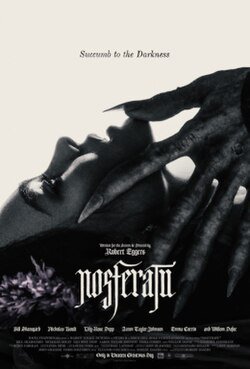
Gary Oldman. Bill Skarsgård. Frank Langella. Three actors playing essentially the same character: Count Dracula. Yes, Skarsgård technically plays Count Orlok, but we know who he really is. The German courts made that abundantly clear during the copyright dispute surrounding F. W. Murnau's Nosferatu (1922). Yet these three incarnations of Dracula barely seem to belong to the same species.
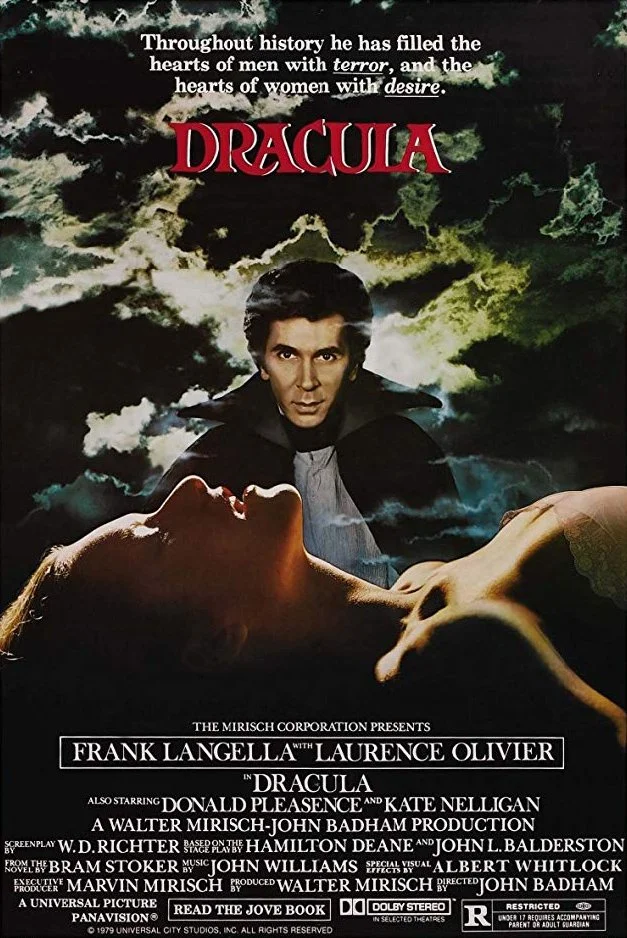
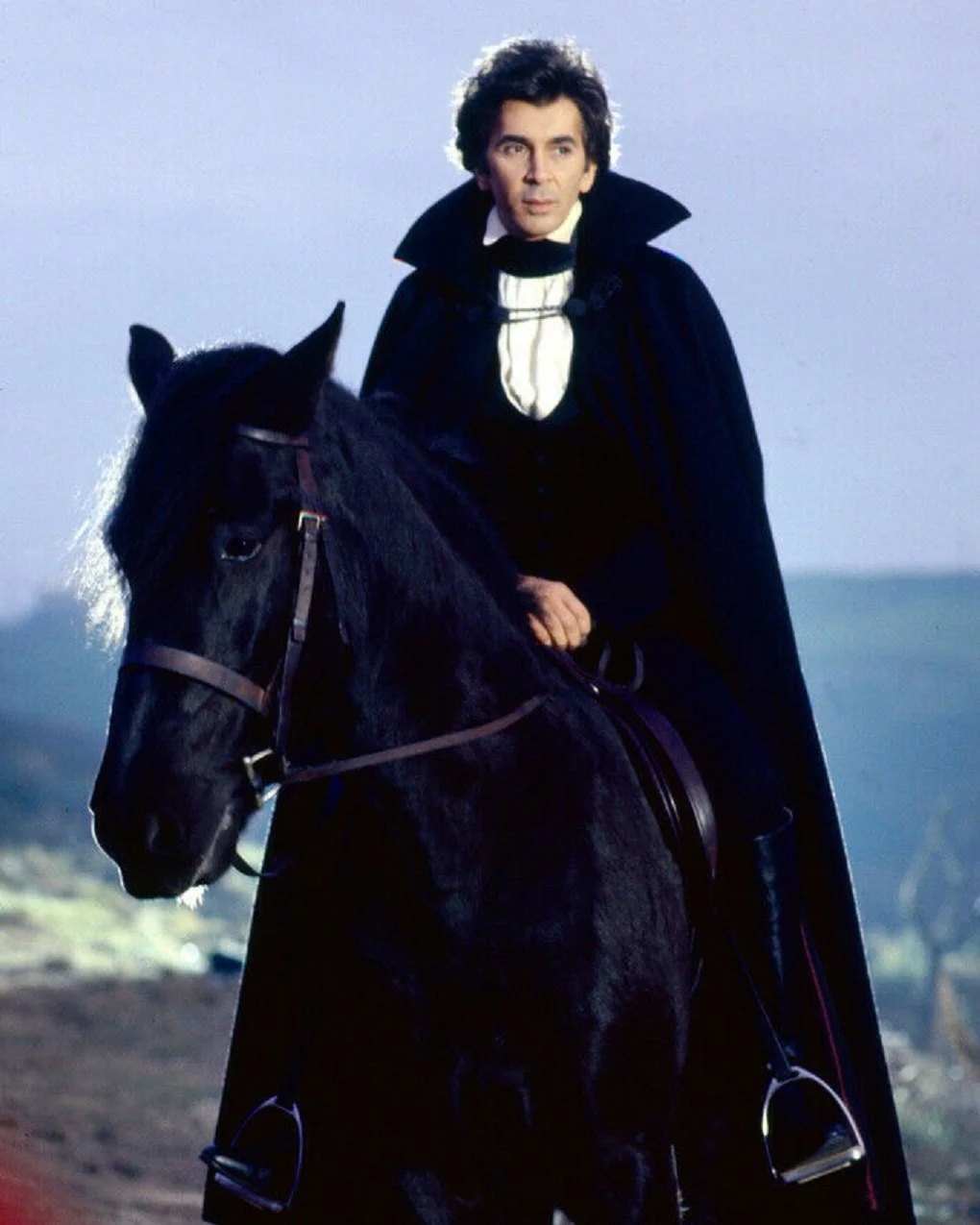
In Dracula (1979), directed by John Badham (Saturday Night Fever, Short Circuit), Langella plays an aristocratic seducer who retrieves a vampire tradition that predates Bram Stoker: Lord Ruthven, the protagonist of John Polidori's novella The Vampyre (1819). Inspired by Lord Byron, Ruthven's literary origins reach back to that famously stormy summer of 1816 at Villa Diodati on Lake Geneva, where a gathering of writers challenged one another to invent terrifying stories. Mary Shelley emerged with the beginnings of Frankenstein, while Polidori eventually gave the world a new kind of vampire: wealthy, socially connected, and dangerously erotic. Langella's Dracula is not a literal adaptation of Ruthven, but he belongs to the same literary genealogy. This is a vampire who gets invited in not merely because supernatural rules demand an invitation, but because people actually want him there.
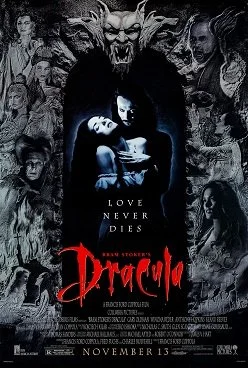
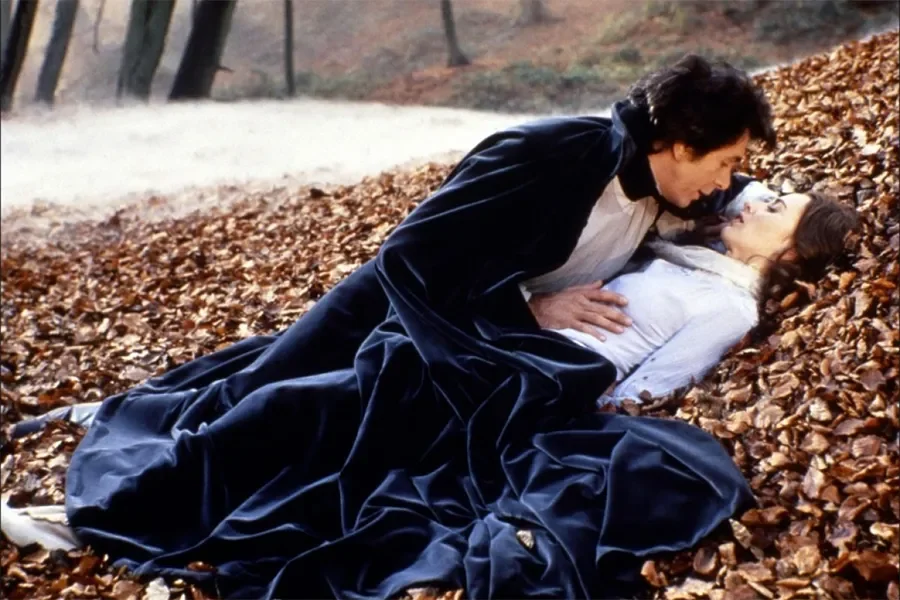
Francis Ford Coppola's Bram Stoker's Dracula (1992) takes the opposite approach: rather than retrieving one vampire tradition, it embraces nearly all of them. This is Dracula as accumulated myth. He's Ruthven and revenant, aristocrat and animal, old man and young man, historical prince and cinematic monster. Coppola absorbs more than a century of vampire iconography, deploying deliberately archaic cinematic techniques to transform Dracula into something resembling his own cultural history made flesh. Despite the title's questionable claim to literary fidelity, this may actually be the most comprehensive Dracula. Coppola reminds us that there is no single authentic version of the character because Dracula himself is the product of competing traditions.
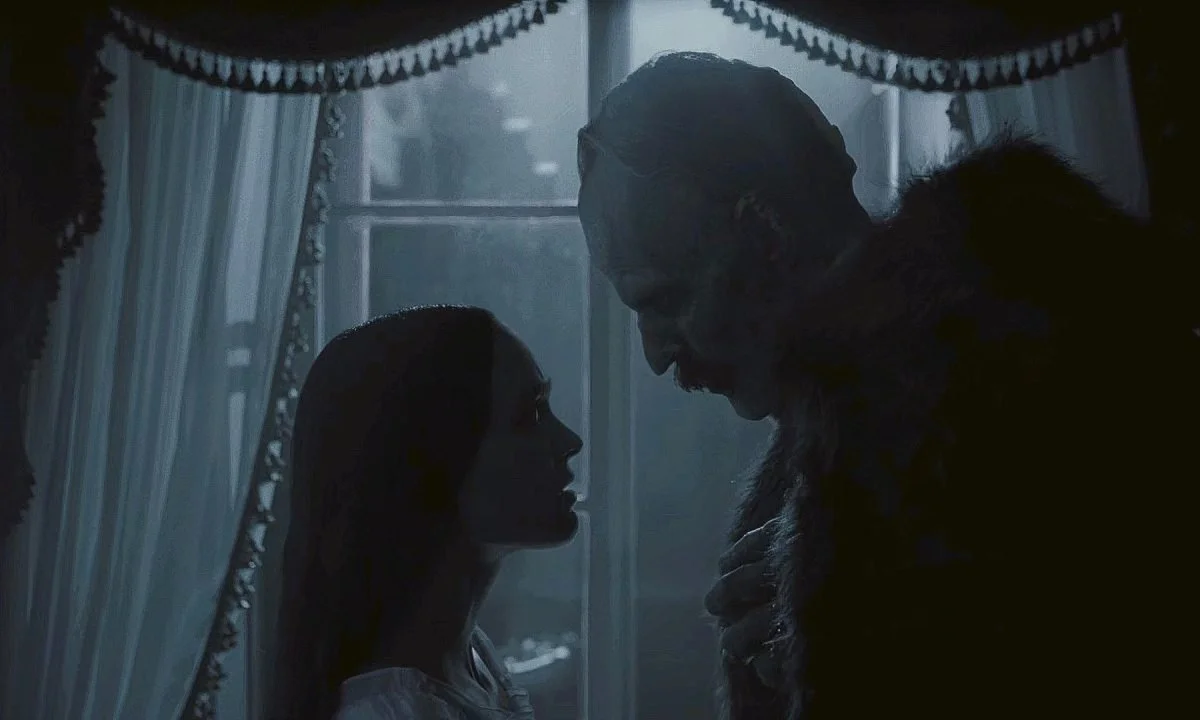
Robert Eggers's Nosferatu (2024), meanwhile, takes us in the opposite direction, toward Dracula before Dracula. Eggers strips away much of the romantic aristocratic tradition to excavate the folkloric corpse beneath it: plague, appetite, putrefaction, sexuality as violation and compulsion, the vampire as something profoundly dead. His Orlok is not Ruthven perfected, but something closer to the creature that existed before Ruthven civilized the vampire. Where Langella seduces and Oldman transforms, Skarsgård contaminates.
These are not simply three directorial interpretations of the same character. They represent three distinct encounters with the cultural history of the vampire, each retrieving something different from a mythology that refuses to stay buried. Dracula survives precisely because no single incarnation can exhaust him. Every generation reaches into his genealogy and resurrects a different monster. Badham gives us the Dracula we might invite in. Coppola gives us the Dracula we mythologize. Eggers gives us the Dracula we fear.
The Seducer — Dracula (1979)
Badham's film gives us the monster first and then the seducer. The film opens with perhaps the most savage Demeter voyage sequence of any Dracula film. The storm that Dracula summons is pure chaos. He breaks free of his coffin as a wolf, tearing through the crew and leaving destruction in his wake. The ship's wreckage on the English shore makes it clear that hell was unleashed aboard. Badham's vampire arrives in England not as a gentleman, but as a catastrophe. Minutes later, we encounter Langella's first appearance as the Count, while Renfield (Tony Haygarth) brings Dracula's boxes into his new home at Carfax Abbey. The thing responsible for the carnage aboard the Demeter suddenly presents itself like an actor stepping onto a stage. Dracula has arrived.
But the theatrical metaphor is more revealing than it initially appears. The stage entrance isn't his arrival in England. It's his entrance into society. The temptation is to describe Langella's Dracula as a sexy modernization of the character, a product of 1970s sexual liberation or the exhaustion of Hammer horror. Yet Badham and Langella are retrieving a much older vampire tradition. Langella is arguably one of cinema's most Ruthven-like Draculas, not because he literally adapts Polidori's character, but because he resurrects the aristocratic seducer who helped establish the vampire in nineteenth-century literature.
“In spite of the deadly hue of his face, which never gained a warmer tint, either from the blush of modesty, or from the strong emotion of passion…. He gazed upon the mirth around him, as if he could not participate therein. At the same time, he was capable of attracting the attention of the women.” – The Vampyre, John Polidori (1819)
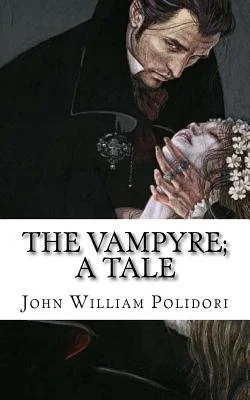
Polidori's Lord Ruthven established the vampire as an aristocratic social predator. Wealthy, fascinating, sexually magnetic, and emotionally opaque, Ruthven moves effortlessly through respectable society, leaving destruction behind him. He is dangerous precisely because people invite him into their lives. Ruthven was partly shaped by Polidori's poisonous portrait of Lord Byron, whose charisma and sexual notoriety supplied the model for a predator concealed beneath the manners of a gentleman. Stoker would later add folklore, invasion anxiety, degeneration, animality, and the anxieties of modernity to the vampire's literary identity. But the aristocratic seducer remained embedded in Dracula's DNA. What Badham and Langella do in 1979 is turn that Ruthven gene way back up.
That's practically the organizing principle of Langella's performance. His Dracula doesn't need to frighten Lucy Seward (Kate Nelligan) into submission. He attracts her. He's composed, elegant, intelligent, sexually assured, and almost entirely uninterested in the traditional theatrical business of playing a monster. His power comes from how comfortably he inhabits civilized space. In a curious reversal of Stoker's novel, Lucy and Mina effectively exchange places: Lucy becomes Dracula's principal romantic interest, while Mina (Jan Francis) assumes the role of his doomed early victim. Lucy, whom Badham reimagines as the daughter of Dr. Seward (Donald Pleasence), encounters Dracula not simply as a supernatural threat but as an alternative to the respectable world surrounding her.
Much of the film is structured around the Dracula’s seduction of Lucy. Early in the film, at a dinner party thrown by Dr. Seward to greet the Count as his new neighbor, Lucy entices Dracula do dance with her and though pretending to be not much of a dancer, the Count proves himself as more than capable. Later in the film Dracula invites Lucy over to his home at Carfax Abbey for dinner, and the two dine amongst the decrepit home filled with dust and cobwebs, though Lucy is so hypnotically drawn to the Count that she barely notices (and for a moment, the audience almost forgets as well); and the Count has not even bit her at this point. When Dracula finally does feed from Lucy, the moment is a mesmerizing scene that presents the unholy union through smoke and a light show, using studio props used by the band The Who for their recent tour. What begins as a Gothic seduction culminates in something resembling a psychedelic rock concert, as the lovers' bodies dissolve into a spectacle of light, smoke, and erotic abstraction. Dracula has not simply seduced Lucy; he has seduced the film itself, transforming the familiar iconography of Gothic horror into the visual language of late-1970s romantic spectacle.
We should also pause to appreciate John Williams' magnificent, somewhat underrated score. Williams understands the distinction between the monster and the aristocrat, and his music participates in constructing Dracula's public persona. Those enormous orchestral gestures—horns, timpani, ascending strings—don't necessarily tell us what Dracula is. They tell us how Dracula wishes to appear. Williams doesn't merely accompany Langella's Dracula. He announces him. The principal theme possesses a sweeping, darkly aristocratic confidence, making Dracula's appearances feel less like entrances than coronations. There's danger in the music, certainly, but also elegance, masculinity, momentum, and seduction. It doesn't sound like music for a rotting corpse. It sounds like music for Frank Langella.
And when those strings begin their ascent, something wonderfully paradoxical happens. The vampire, traditionally associated with crypts, burial, earth, and downward movement, is given music that seems to rise toward the heavens. Williams gives the undead a promise of transcendence. The same creature who arrived aboard the Demeter amid death and destruction now seems capable of elevating those who surrender to him. First the horns. Then the timpani. Then the strings climb upward. Dracula has become something magnificent, even if we know what lies beneath the performance.
So why isn't Badham's Dracula better remembered? Part of the problem may be 1979 itself. The film arrived after Hammer had largely exhausted one model of the cinematic vampire, while Alien and the emerging slasher cycle were redefining the possibilities of contemporary horror. Then, thirteen years later, Coppola would arrive with a film so visually extravagant and culturally overwhelming that it became the prestige romantic Dracula for subsequent generations. Badham's film was squeezed between eras.
Yet its position in that history makes it all the more fascinating. Langella's Dracula looks forward to the romantic vampire who would become increasingly familiar in popular culture, while simultaneously reaching backward to the aristocratic predator of Polidori's imagination. The film's great trick is that it never entirely allows us to forget the creature aboard the Demeter. Beneath the elegance, the seductive voice, and Williams' magnificent orchestral flourishes, the monster remains. Badham gives us a Dracula we might willingly invite into our homes, even after seeing what happens when he arrives uninvited.
The Myth — Bram Stoker's Dracula (1992)
“His face was a strong—a very strong—aquiline.” – Jonathan Harker, Ch. 2
“The whole awful creature was simply gorged with blood.” – Jonathan Harker, Ch. 4
“…a dark figure standing between me and the moonlight.” – Mina Murray, Ch. 8
“…a tall, thin man, with a beaky nose and black moustache.” – Jonathan Harker, Ch.13
“His eyes flamed red with devilish passion.” – Mina Murray, Ch. 21
All of the quotes above describe the same person, and this foreshadows how Francis Ford Coppola envisions the character. Where Badham retrieves one particular strand of the vampire's literary genealogy, Coppola wants the entire thing. His Bram Stoker's Dracula (1992) is a film of magnificent excess, an attempt to contain the accumulated cultural history of Dracula within a single cinematic experience. Aristocrat, lover, beast, corpse, warrior, cinematic special effect: Coppola gives us all of them. His Dracula is not simply a character adapted from a nineteenth-century novel. He is a monster assembled from more than a century of mythology and moving images.
There's something wonderfully appropriate about this approach to Stoker's novel. Dracula is an epistolary work, a narrative assembled from journals, letters, telegrams, newspaper reports, phonograph recordings, and ships' logs. No single character possesses the vampire whole. Instead, Dracula emerges piecemeal through the information technologies of the late nineteenth century, reconstructed by characters who must assemble disparate accounts into a coherent understanding of the monster threatening them. Stoker's vampire is, in this sense, already a creature of modern media.
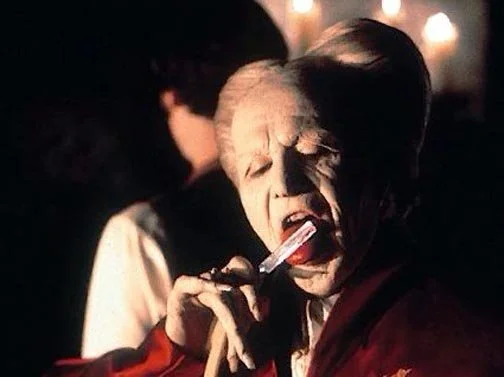
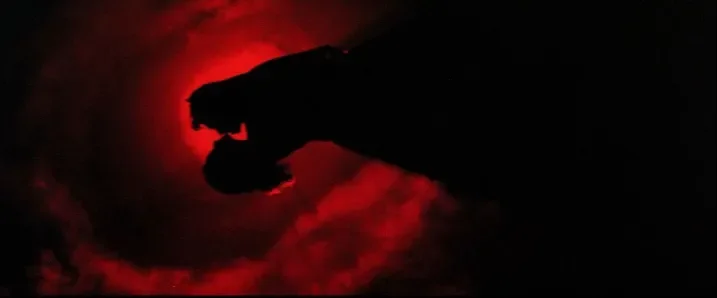
Consider the extraordinary opening sequence, which transforms the historical Vlad Dracula into something resembling a figure from an elaborate shadow play. Coppola uses miniatures, silhouettes, theatrical lighting, and deliberately artificial landscapes to construct a medieval world that looks less like historical reconstruction than a nightmare assembled from the earliest traditions of cinematic spectacle. The film's visual language is conspicuously archaic, relying on techniques associated with cinema's infancy rather than the increasingly sophisticated digital effects available in the early 1990s. Coppola doesn't merely tell us that Dracula belongs to the past. He makes the past of cinema itself part of Dracula's identity.
Then, later in the film, we have a tender moment between Dracula and Mina in which they drink absinthe and speak of memory and loss. Oldman's Count offers a very different kind of seduction than Langella's. His voice transports Mina to “a land beyond a great vast forest, surrounded by majestic mountains, lush vineyards, and flowers of such frailty and beauty, as to be found nowhere else.” As he speaks, images of Dracula's homeland and human past are superimposed over Mina, as though his memories are becoming her own. The absinthe becomes something of a gateway to another time, dissolving the boundaries between past and present, memory and desire. For a moment, Mina seems to inhabit a history that predates her own existence. Where Langella's Dracula seduces through his physical presence, Oldman's seduces through the promise of a shared past. He is not merely trying to win Mina's affection. He is trying to persuade her that she already belongs to him.
And the transformations never stop. Dracula is an impossibly ancient aristocrat, a seductive young prince, a wolf-like creature, a monstrous bat, and a dying warrior. Gary Oldman's performance somehow holds these contradictory identities together. He can be genuinely grotesque in one scene and heartbreakingly vulnerable in another, and we accept that they belong to the same creature. His Dracula isn't merely changing disguises. He seems to be moving between different historical conceptions of what a vampire can be. Oldman plays not one Dracula, but an entire genealogy of Draculas.
Wojciech Kilar's magnificent score operates according to the same principle. Where John Williams gives Langella's Dracula a sweeping, darkly aristocratic confidence, Kilar makes Oldman's Dracula sound ancient, erotic, tragic, and apocalyptic simultaneously. The low strings, relentless pulse, and choral weight suggest something far larger than an individual monster. Dracula isn't merely entering a room; centuries of doomed history are entering with him. "Love Remembered" supplies the film's aching Romantic dimension, while "The Beginning" sounds practically like the gates of hell opening. There's no irony and almost no restraint. Kilar believes completely in Coppola's gigantic conception of the character, scoring the entire enterprise as though the fate of Western civilization depends upon Mina remembering who Gary Oldman is.
And what an enterprise it is. This movie has everything: horror, sex, blood, religion, disease, animals, dreams, Victorian technology, medieval history, reincarnation, melodrama, theatricality, and early-cinema trickery. Coppola never chooses between the contradictions. Dracula is monster and lover, corpse and beautiful young man, predator and victim, historical figure and myth, repulsive and intensely desirable. Even the film's romantic premise, which transforms Dracula into a tragic lover searching across centuries for his reincarnated bride, exists alongside scenes of extraordinary cruelty and bodily horror. The film asks us to pity Dracula without ever entirely allowing us to forget what he is.
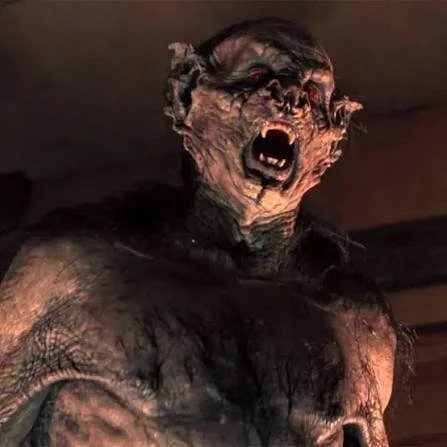
That's why its excess works for me. Bram Stoker's Dracula shouldn't be tasteful. It should be too much. Too red. Too sexual. Too violent. Too romantic. Too Catholic. Too operatic. Too many costumes. Too much music. Dracula has accumulated a century's worth of cultural meanings, and Coppola somehow makes a movie capacious enough to contain them. His fidelity isn't necessarily to Stoker's narrative, but to the cultural mythology that Stoker helped unleash. Coppola gives us Dracula in totality.
Eggers's Nosferatu might be the film I'd point to and say, "This is what a vampire is." Badham might make me say, "This is why we desire Dracula." But Coppola makes me say, "This is Dracula."
The Monster — Nosferatu (2024)
Where Coppola attempts to contain the entire cultural history of Dracula, Robert Eggers excavates in the opposite direction. His Nosferatu (2024) strips away the civilized vampire, digging beneath centuries of aristocratic seduction and romantic mythology toward something older: folklore, pestilence, appetite, death, and the revenant. If Coppola's Dracula is an accumulation of images, Eggers's Count Orlok feels like something unearthed from the ground. He is not the vampire as tragic lover or irresistible gentleman. He is the corpse that refuses to stay buried.
“They found him whole and undecayed. Fresh blood had flowed from his eyes, nose, mouth and ears; his shirt, the sheet over him and the coffin were soaked with blood; the old nails of his hands and feet had come off with the skin, and new ones had grown in their place. Seeing from this that he was a real vampire, they drove a stake through his heart, as is their custom, at which he gave a clearly audible groan and let out a great deal of blood. The same day they burned the body to ashes and threw the ashes into the grave.” - Visum et Repertum (Johann Flückinger, 1732)
This is the world Eggers wants to recover. Strip away a century of capes, evening clothes, opera-house sexuality, and aristocratic melancholy, and something terrible remains. Eggers's Orlok does not seem to have stepped out of another Dracula movie. He seems to have been exhumed from a document.
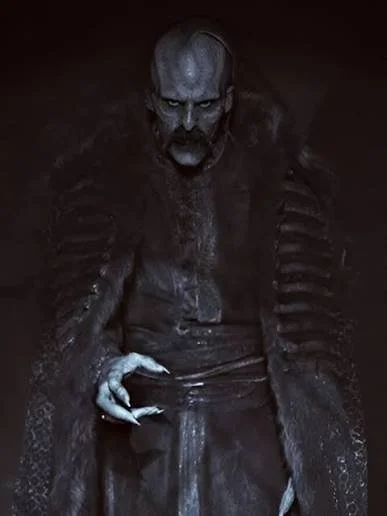
Bill Skarsgård's extraordinary performance makes that historical excavation physical. His Orlok is a towering, decomposing presence, with a thick mustache, a grotesquely damaged body, and a voice that seems to emerge from somewhere beneath the earth. Even his movements suggest the immense effort of a corpse continuing to inhabit a world from which it should have disappeared. Gone is Langella's effortless elegance or Oldman's protean theatricality. Orlok does not need to become beautiful. His power comes from the horrifying insistence of his continued existence.
And wherever he goes, death follows. Orlok's arrival in Wisborg transforms the vampire from an individual predator into a collective catastrophe. Rats, disease, and mounting corpses turn the town into an environment of contamination. His presence is not merely a threat to the people he desires or the households he enters. It is a threat to the social world itself. The plague becomes an extension of his body, spreading his monstrosity beyond the confines of the castle and into the streets, homes, and institutions of the living. Where Badham's Dracula arrives aboard the Demeter as a catastrophe before becoming a gentleman, Eggers refuses the transformation. Orlok arrives as pestilence and remains pestilence.
Yet Eggers's return to folklore is not simply a rejection of the romantic vampire. Desire remains central to Nosferatu, although the film renders it deeply unsettling. Ellen Hutter (Lily-Rose Depp) has been bound to Orlok since her youth, when her longing for companionship summoned something she could neither understand nor control. Their relationship is simultaneously erotic, supernatural, coercive, and terrifying. Orlok does not court Ellen with Langella's aristocratic charm, nor does he offer Coppola's promise of love transcending centuries. He demands possession. His desire is inseparable from appetite, and his intimacy is inseparable from violation.
This makes Ellen's role particularly fascinating. She is not merely the object of the vampire's desire, but the figure through whom that desire becomes both possible and ultimately destructive. Her final encounter with Orlok transforms the bedroom into a place where erotic intimacy and bodily annihilation become indistinguishable. As Orlok feeds upon her, Ellen holds him until the rising sun destroys him. The image is simultaneously an embrace, a sacrifice, and an execution. Eggers offers something resembling the consummation of a Gothic romance, but empties it of the redemptive fantasy that Coppola embraces. Love does not redeem the vampire. Desire becomes the means of his destruction.
And perhaps that is the most unsettling achievement of Eggers's film. He returns the vampire to the grave without entirely severing the erotic mythology that subsequent generations have attached to it. Orlok is both an archaic revenant and a thoroughly modern monster, one whose relationship to Ellen raises uncomfortable questions about longing, repression, coercion, and the boundaries of consent. The folkloric corpse has returned, but he carries the accumulated anxieties of the present with him.
Badham makes the vampire desirable. Coppola makes him romantic. Eggers makes desire itself horrifying. His Orlok may look as though he has been excavated from an eighteenth-century account of the returning dead, but the terror he embodies is unmistakably contemporary.