Further Reading & Viewing
Why Disaster Movies Are Set in L.A.
Los Angeles is a city that often feels imagined before it was built, a place where movies, memory, architecture, myth, infrastructure, fantasy, ecology, and everyday life constantly overlap. Tonight’s talk only scratches the surface.
If you have ever found yourself staring at the concrete Los Angeles River wondering why it feels vaguely post apocalyptic, or driving through a neighborhood asking what stood there before the strip mall, freeway interchange, luxury apartment complex, or coffee shop appeared, welcome. You are already beginning to think like a Los Angeles historian.
The books, films, and ideas below helped shape this talk and explore why Los Angeles so often feels suspended somewhere between dream and catastrophe.
Start Here: The Big Ideas
Land of Smoke and Mirrors by Vincent Brook
A fantastic entry point into understanding Los Angeles as both a real city and a cultural invention. Brook argues that L.A. emerged through a strange combination of fantasy, media, reinvention, and contradiction, a place constantly caught between reality and representation. If Los Angeles feels simultaneously artificial and deeply real, this book helps explain why.
Ecology of Fear by Mike Davis
Perhaps the definitive book on Los Angeles and disaster. Davis explores earthquakes, fires, floods, environmental instability, and social inequality to argue that catastrophe in Southern California is never simply “natural.” Los Angeles, he suggests, lives in an ongoing state of ordinary disaster shaped as much by politics, development, inequality, and urban planning as geology. Essential reading for anyone wondering why Hollywood keeps destroying the city.
City of Quartz by Mike Davis
Think of this as the dark underbelly of Los Angeles mythology. Davis reads the city through surveillance, class division, architecture, privatized space, policing, and urban paranoia. Suddenly, every empty parking lot, security gate, and anonymous office park begins to feel like part of a noir conspiracy.
Southern California: An Island on the Land by Carey McWilliams
Originally published in 1946, this remains one of the greatest books ever written about Southern California. McWilliams captures the region as geographically isolated, culturally hybrid, environmentally unstable, and perpetually reinventing itself. Long before “content creators” and cinematic branding, McWilliams understood Southern California as a place shaped by reinvention and illusion.
Los Angeles as Media Fantasy
The History of Forgetting by Norman M. Klein
Klein famously described Los Angeles as a “land of scripted spaces,” a city where we move through environments already shaped by movies, advertisements, television, architecture, nostalgia, and forgetting. The city often feels familiar before we arrive because media has already taught us how to experience it. If tonight’s lecture made you suddenly see Los Angeles as layered, haunted, or strangely familiar, you are already thinking in Klein’s terms.
America and Simulacra and Simulation by Jean Baudrillard
If Los Angeles sometimes feels like a movie pretending to be a city pretending to be a movie, Baudrillard is your guide. His ideas about simulation and hyperreality help explain why Southern California can feel simultaneously artificial and emotionally real, spectacular and strangely empty.
Mythologies by Roland Barthes
A slim but powerful book about the way everyday culture transforms into mythology. Want to understand how freeways, palm trees, earthquakes, Hollywood signs, celebrity culture, and endless sunshine become symbols larger than themselves? Barthes provides a surprisingly useful toolkit.
Los Angeles and Film: A Cultural History by John Trafton
If tonight’s lecture sparked something for you, my forthcoming book (September 2026) expands the story. Moving from early cinema to the late twentieth century, Los Angeles and Film explores how movies did not simply represent Los Angeles but actively shaped how the city was imagined, built, remembered, and mythologized. Part cultural history, part cinematic archaeology, it asks a deceptively simple question: what happens when a city becomes inseparable from the stories told about it?
For the Disaster Movie Lovers
Earthquake (1974)
The quintessential Los Angeles disaster film and a perfect time capsule of 1970s fears surrounding infrastructure, freeways, urban fragility, and civic breakdown.
Volcano (1997)
Absurd? Absolutely. Secretly insightful about Los Angeles infrastructure, racial politics, civic anxiety, and the city’s relationship to environmental instability? Also yes.
San Andreas (2015)
Hollywood’s fantasy of surviving “The Big One,” complete with collapsing skylines, impossible geography, and a city imagined as permanently on the brink.
Kiss Me Deadly (1955)
Not technically a disaster film, but perhaps the ultimate Los Angeles apocalypse movie before disaster cinema existed. Noir understood something later disaster movies would literalize: Los Angeles often feels like a city waiting for collapse.
The Terminator
James Cameron’s techno noir turns Los Angeles into a nightmarish landscape of industrial spaces, freeways, and urban alienation, imagining the city as ground zero for an impending technological apocalypse.
Terminator 2: Judgment Day
Perhaps the definitive Los Angeles action film, T2 transforms the city’s freeways, flood channels, malls, and suburbs into a battleground where everyday infrastructure becomes spectacular terrain for survival.
Die Hard
A Christmas movie, yes, but also a fascinating portrait of late twentieth century corporate Los Angeles, where the sleek glass tower becomes both fortress and symbol of global capitalism under siege.
Point Break
Kathryn Bigelow’s cult classic captures Los Angeles as a geography of movement, surf culture, masculinity, and adrenaline, revealing Southern California as both utopian playground and existential dead end.
Strange Days
Set in a near future Los Angeles on the brink of social collapse, Kathryn Bigelow’s cyber noir imagines the city as a mediascape consumed by surveillance, memory, technology, and urban unrest.
Sharknado
Ridiculous in all the right ways, Sharknado satirizes Los Angeles disaster culture by turning the city’s obsession with catastrophe into gleeful absurdity.
Airplane!
A brilliantly chaotic parody of disaster cinema that hilariously exposes the absurd formulas, anxieties, and clichés underlying the blockbuster catastrophe film.
Speed
Few films capture Los Angeles infrastructure more viscerally, transforming buses, freeways, transit systems, and traffic into pure cinematic suspense.
Lethal Weapon
Beneath its buddy cop energy lies a compelling portrait of 1980s Los Angeles, moving between suburban comfort, drug economies, class divisions, and the city’s increasingly militarized landscape.
Blade Runner
Ridley Scott’s visionary dystopia reimagines Los Angeles as an overcrowded, environmentally degraded, multicultural future metropolis where noir, corporate power, and ecological collapse converge.
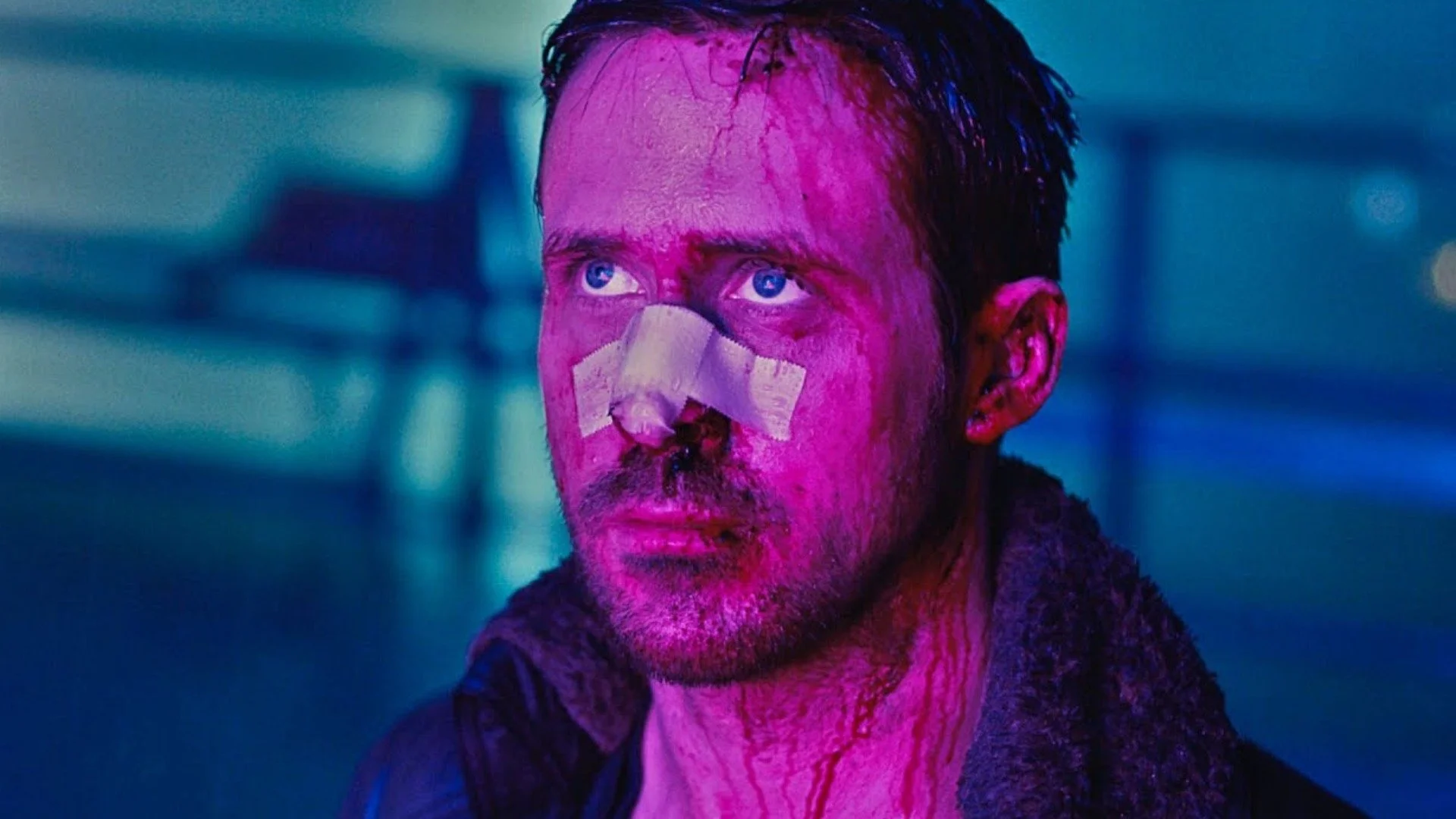
Blade Runner 2049
Denis Villeneuve expands the original’s apocalyptic vision into a haunting meditation on environmental ruin, memory, abandonment, and what remains of Los Angeles after the future has already failed.
A Small Experiment for Living in Los Angeles
The next time you drive through Los Angeles, or walk around Atwater Village, Frogtown, Highland Park, Echo Park, or Downtown, ask yourself:
What used to be here?
What stories shaped how I imagine this place?
Am I seeing the city itself, or memories of movies about the city?
Los Angeles has already destroyed and rewritten itself thousands of times, both on screen and off screen. Part of the joy of living here is learning how to read the layers.
You may never look at a parking lot, freeway interchange, or stretch of the Los Angeles River quite the same way again.
Los Angeles Disaster Cinema